
Coeliac Disease
What is it?
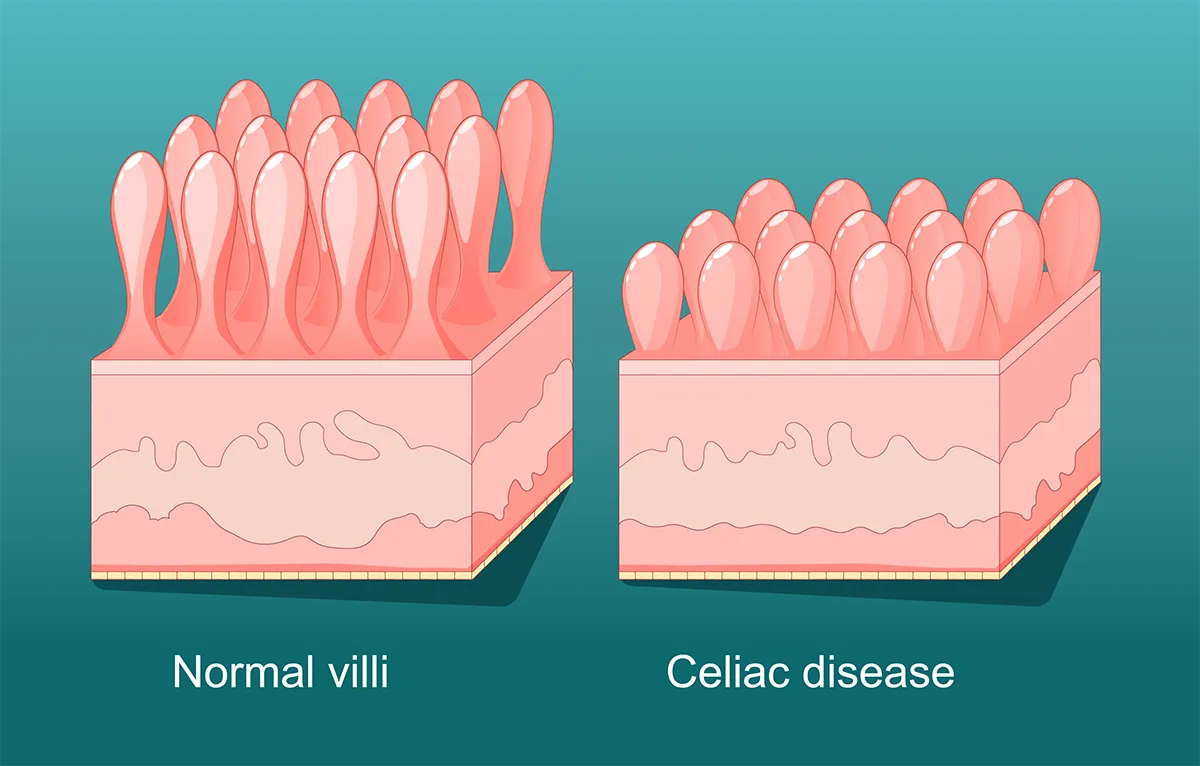
Coeliac disease is an autoimmune condition when an individual is sensitive to gluten which causes damage to the gut lining (villi). As a result, the absorption of nutrients is impaired. It is one of the causes for iron deficiency anaemia and osteoporosis.

How common is it?
Coeliac disease is a relatively common condition affecting 1% of the population. The incidence of coeliac disease increases by tenfold when there is a first degree relative affected by the disease. It is also more common in other associated medical conditions such as Williams syndrome, Turner syndrome, Down syndrome, diabetes and autoimmune thyroiditis.
What are the signs and symptoms?
Coeliac disease can cause iron deficiency anaemia, poor growth, mouth ulcers, osteoporosis, dermatitis herpetiformis, lethargy, abdominal distension, pale stool and poor dentition. A child with coeliac disease is sometimes miserable and withdrawn.
How is it diagnosed?
It is diagnosed initially by blood tests. Anti-tissue transglutaminase IgA is raised with positivity of anti-endomysial antibody IgA. The patient will then undergo gastroscopy to obtain small bowel tissue diagnosis (villi atrophy). If anti-TTG is greater than ten times the upper limit, the patient will undergo another repeat anti-tissue transglutaminase IgA. If both levels are greater than ten times the upper limit with positive anti-endomysial antibody, the patient can be diagnosed with coeliac disease without needing a gastroscopy.
What is the treatment?
Gluten is found in rye, barley and wheat. Coeliac disease patients will need to be on a gluten-free diet (<20ppm of gluten) for life. It is a lifelong condition, but it is not a life-limiting condition.
If you are sensitive to gluten but has negative coeliac anti-TTG level, you may have non-coeliac gluten hypersensitivity.
Important notes:
Coeliac disease is an evolving condition. Patients with initial negative anti-TTG level may become positive in the future. If there is a strong suspicion, it is still worth repeating the coeliac antibody level a few years later.
A child with unexplained poor growth or anaemia should be screened for coeliac disease.
Patients with coeliac disease may not have signs and symptoms of coeliac disease on consumption of gluten. It is called silent coeliac disease (no symptoms, positive coeliac serology, positive biopsies) and latent coeliac disease (positive coeliac serology and normal biopsies).
Book Appointment
Call 07961 767 854 or complete our enquiry form. We try to respond within 30 minutes between 7.00am and 7.00pm (London time).