
Food Protein Allergies and Intolerances
What is it?
Food protein allergy is an allergic immune response to food protein. Immediate allergic reaction occurs within two hours after ingestion of offending food. Delayed reaction occurs between 2 hours to 72 hours after consuming the offending food. Food protein intolerance is an inability to digest and metabolise the food protein. It is not immune mediated.

How common is it?
It occurs in about 1% to 5% of the population.
What are the signs and symptoms?
Children with immediate food protein allergy often presents with nausea, vomiting, abdominal pain, diarrhoea, lip swelling, tongue swelling, rash, airway compromise and wheeze, which occur within two hours after ingestion. This can be life-threatening. Delayed onset food allergy occurs between 2 hours to 72 hours after consuming offending food. The signs and symptoms include abdominal pain, diarrhoea, nausea and constipation. Food protein intolerance can give rise to abdominal pain, diarrhoea, nausea, vomiting, heart burns and abdominal bloating.
In delayed food allergy or food protein intolerance, the reaction to food can be cumulative and dose-dependent. Children exhibit the symptoms when the food protein reaches a limit that they cannot cope with.
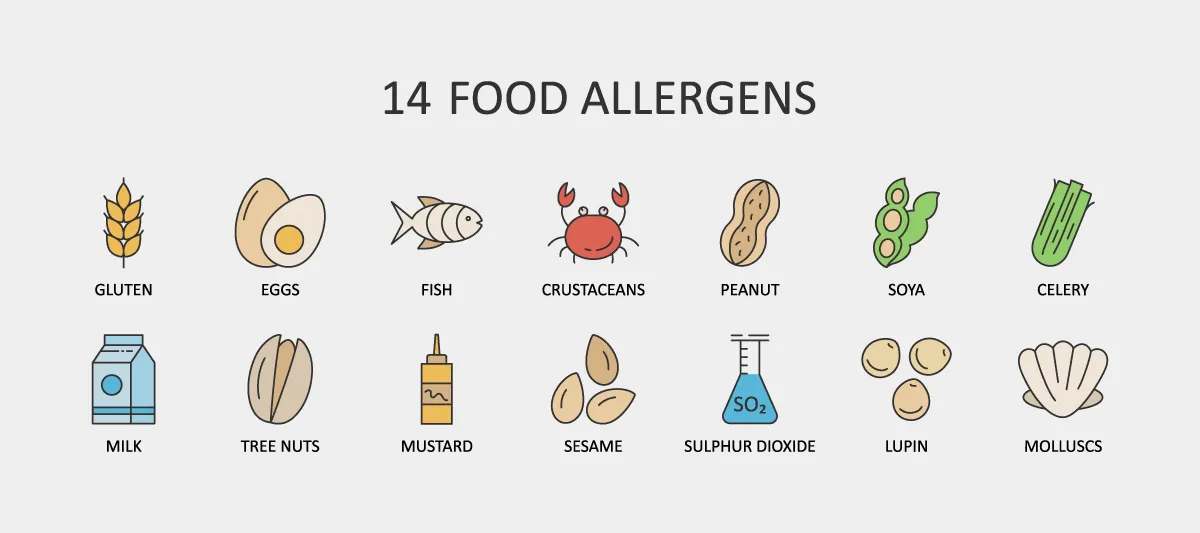
Typical food protein allergies or intolerances include milk, egg, wheat, soya, fish, nuts and sesame.
How is it diagnosed?
The diagnosis of immediate food allergy can be done by carrying out skin prick testing and also blood tests (IgE RAST). Delayed onset food allergy or intolerance requires a defined brief period of exclusion followed by a food challenge. The reaction to the food has to be reproducible.
A negative skin prick test does not rule out delayed onset food allergy or intolerance. Therefore, children with negative skin prick tests will still require a period of exclusion diet, and often one single food exclusion is necessary unless the child has multiple food allergies or intolerances.
Food allergy can also cause dysmotility of the whole digestive tract (mouth to anus). Eosinophilic oesophagitis is a common food allergy condition affecting the oesophagus, causing difficulty in swallowing. This can be diagnosed by carrying out a gastroscopy and obtaining a histological diagnosis where there is abundance of eosinophils and inflamed cells in the oesophageal biopsies. It is important that a brief period of exclusion diet is necessary to establish a diagnosis.
Important notes:
A dietitian input is vital to the management of food allergies or intolerances. Patients with a dairy-free diet need to be assessed for their calcium intake. Calcium is important for a growing child. Mothers who are excluding dairy while breastfeeding their child will need to be on calcium and vitamin D supplements such as Pregnacare.
A prolonged period of food exclusion is often not required. Often, children with food allergies or intolerances can generally tolerate a certain amount of food protein.
Book Appointment
Call 07961 767 854 or complete our enquiry form. We try to respond within 30 minutes between 7.00am and 7.00pm (London time).