
Fructose Intolerance
What is it?
Fructose intolerance means your body cannot properly digest and process fructose properly, a naturally occurring sugar commonly found in fruits, some vegetables and many natural sweeteners.
There are two main types of fructose intolerance:
1. Hereditary fructose intolerance. This is a rare genetic condition caused by a mutation in the aldolase B gene. Hereditary fructose intolerance sufferers are unable to convert fructose into glucose. This causes low blood sugar. Accumulation of fructose can cause liver damage.
2. Dietary fructose intolerance. This is when your child has a problem digesting and absorbing the fructose in the food he/she eats. Some children can absorb less fructose than others.

How common is it?
Fructose intolerance is relatively common in children and in adults. It is estimated that in one in four adult irritable bowel syndrome sufferers have undiagnosed fructose intolerance. Over the past 5 years, we have diagnosed many children with fructose intolerance. It is often overlooked by medical professions.
What are the signs and symptoms?
In children with fructose intolerance, the fructose is not absorbed properly. When it reaches the large bowel, it is fermented by the bacteria. As a result, there is an excessive production of hydrogen or methane gas and short-chain fatty acids. This can lead to abdominal bloating, excessive flatulence, abdominal cramps, diarrhoea, burping and halitosis. Fructose intolerance often causes diarrhoea but sometimes can cause constipation. It can also cause gastro-oesophageal reflux symptoms.
How it is diagnosed?
It can be diagnosed by fructose hydrogen breath test. Your child will be asked to drink a fructose solution. He/she will be then asked to blow into a straw connected to the breath test machine. If your child has fructose intolerance, the hydrogen level will rise due to fermentation of bacteria, causing production of hydrogen. The breath test is normally carried out every 15 to 30 minutes for about a period of two hours.
If your child has a positive test, we will refer to a paediatric dietitian for advice on low-fructose dietary treatment.
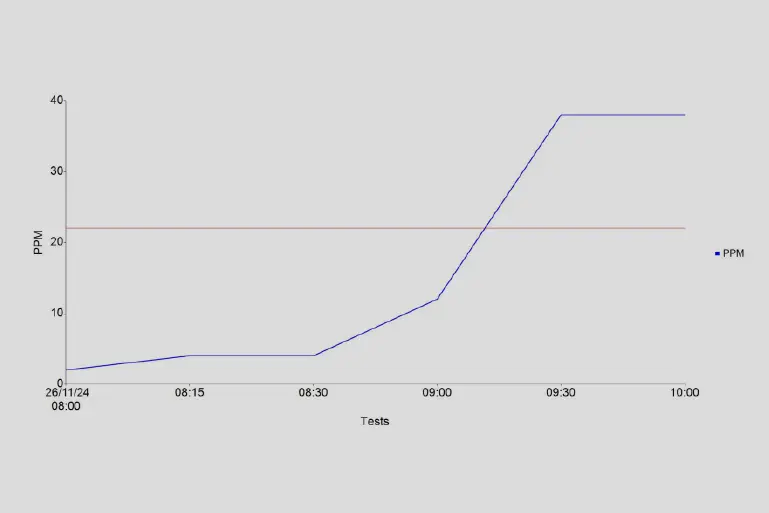
What is the treatment?
Most children with a positive fructose hydrogen breath test will respond to a low-fructose diet. However, in some cases, they may not respond to a low-fructose diet. In this case, your child may have fructose malabsorption. Toddlers tend to have some degree of fructose malabsorption (toddler’s diarrheoa).
Important notes:
Fructose intolerance sometimes can also lead to small intestinal bacterial overgrowth due to overfeeding of the bacteria with fructose.
Subsequent fructose reintroduction is necessary to access the child's level of tolerance. Often the child can tolerate a certain amount of fructose. It is often dose-dependent and has a cumulative effect.
Patients who are on a low-fructose diet may experience constipation. Clinicians will need to be aware that children who are not responding to a low-fructose diet may have an underlying chronic constipation, in which case the child will need to be on a laxative and low-fructose diet simultaneously.
Book Appointment
Call 07961 767 854 or complete our enquiry form. We try to respond within 30 minutes between 7.00am and 7.00pm (London time).