
Helicobacter Pylori Gastritis
What is it?
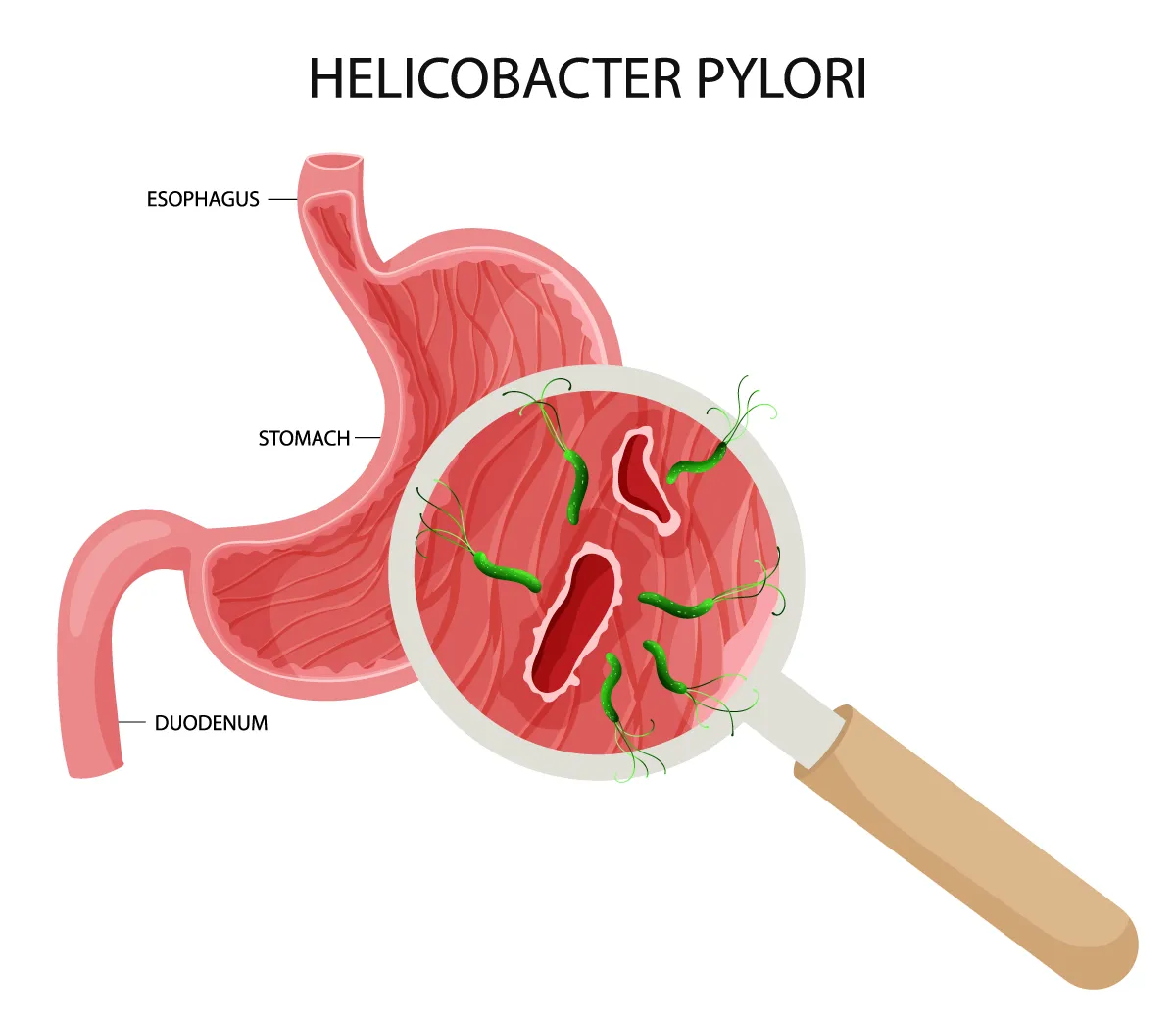
Helicobacter Pylori is a gram-negative bacteria residing in the stomach. It can cause stomach ulcers and inflammation of the stomach (gastritis) and small bowel (duodenitis).

How common is it?
It is quite common in some areas of the world. It can affect 50% of the world population. It affects 1.2% to 12% children in developed countries and is more common in developing countries.
What are the signs and symptoms?
It can cause upper abdominal pain (epigastric region), abdominal bloating, burping, heartburn and nausea. It can also cause anaemia and melaena (black coloured stools).
Untreated long-term Helicobacter Pylori gastritis has an associated risk of gastric cancer and lymphoma.
How is diagnosed?
Helicobacter Pylori infection can be diagnosed by carrying out a stool antigen test. A stomach tissue biopsy obtained from gastroscope is also important particularly for patients who have treatment failure from antibiotics. Helicobacter Pylori can be found in the gastric biopsies by using Giemsa staining. The tissue biopsies can be cultured for antibiotics sensitivity. CLO test can also be also used to diagnose Helicobacter Pylori.
What are the treatments?
The treatment is a combination of antibiotics and usually one to two weeks of Ciprofloxacin, Metronidazole, Clarithromycin or Amoxicillin. The patient will need to be on Proton Pump Inhibitor for a month. Antibiotics course is typically one to two weeks.
A month after stopping the Proton Pump Inhibitor, a repeat stool for Helicobacter pylori antigen is necessary to ensure successful eradication of the infection. Urea breath test can be used to check for successful eradication of Helicobacter Pylori infection.
Treatment for Helicobacter Pylori in children may not be indicated if they do not have typical features to suggest Helicobacter Pylori infection.
Important notes:
Passing melaena stool or hematemesis are signs of Helicobacter Pylori infection.
Children with anaemia should not be treated empirically for Helicobacter Pylori infection. A true cause for anaemia will need to be determined.
Children who are on antacids or proton pump inhibitor medications can have a false negative Helicobacter Pylori status.
Book Appointment
Call 07961 767 854 or complete our enquiry form. We try to respond within 30 minutes between 7.00am and 7.00pm (London time).