
Pancreatitis
What is it?
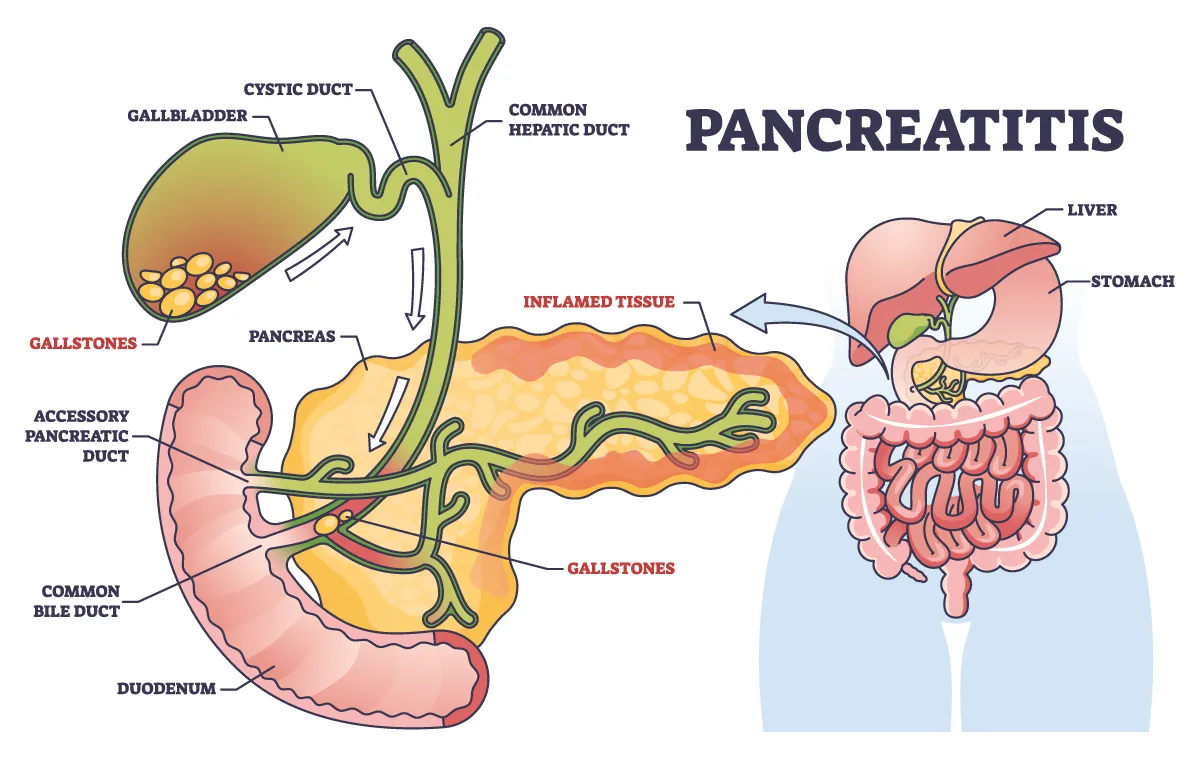
The pancreas is an organ that resides close to the stomach. It produces different enzymes to digest food, particularly fatty foods and sugars (carbohydrates). It also releases hormones such as insulin and glucagon to regulate our blood sugar.
Pancreatitis means inflammation of the pancreas organ.

How common is it?
Acute pancreatitis affects 1 in 10,000 of paediatric population.
There are many causes for pancreatitis such as medications, trauma, infection, electrolyte imbalance, gallstones and excessive alcohol consumption. Sometimes, we do not find the cause of pancreatitis.
What are the signs and symptoms?
Typical symptoms of pancreatitis include epigastric pain, left hypochondrium pain (below left ribcage), back pain and nausea. The patient may experience worsening of abdominal pain during and after mealtime particularly after consuming fatty foods. The stools may contain fat droplets and are pale and oily.
Patient who has developed pancreatic pseudocyst may have a palpable mass in the abdomen. There may be discolouration of the abdomen if the pancreas becomes necrotic.
How is it diagnosed?
Blood tests (amylase and lipase) are often raised in pancreatitis. In patients with autoimmune pancreatitis, they have raised immunoglobulins and positivity of autoantibodies. Chronic pancreatitis can lead to pancreatic insufficiency causing deficiency in fat-soluble vitamins. The faecal elastase will also be low. Microscopy of the stool often shows excess fat globules.
The abdominal ultrasound may reveal pancreatic enlargement, hypoechoic regions within the pancreas, altered pancreatic echotexture, and dilation of the pancreatic or biliary duct. MRI pancreas and MRCP are useful tools to delineate the pancreatic structure.
Children with chronic pancreatitis need to be investigated for hereditary pancreatitis.
What is the treatment?
The management of acute pancreatitis is avoiding of fatty foods, in severe cases a period of starvation that is nil by mouth, analgesia and intravenous fluid as necessary. Naso-jejunal feeding is sometimes indicated.
Untreated chronic pancreatitis can lead to pancreatic insufficiency which can cause fat-soluble vitamin deficiency and high blood sugar. Patients may require supplementary enzymes and vitamins in the long term.
Important notes:
A normal abdominal ultrasound scan does not rule out pancreatitis.
Acute pancreatitis can be life-threatening especially when the pancreas becomes necrotic.
It is common to have borderline raised amylase without actual pancreatic inflammation (hyperamylasaemia).
Book Appointment
Call 07961 767 854 or complete our enquiry form. We try to respond within 30 minutes between 7.00am and 7.00pm (London time).